40+ Years of Macro Trading Insight

The Macro Insights From The Trader Who Moved Markets

The Macro Insights From

The Trader Who

Moved Markets

Andy Krieger did not build his reputation by commentating from the sidelines.

He built it by taking history-defining trades, identifying dislocations, defining risk before capital was committed, and acting when global markets were badly mispriced.

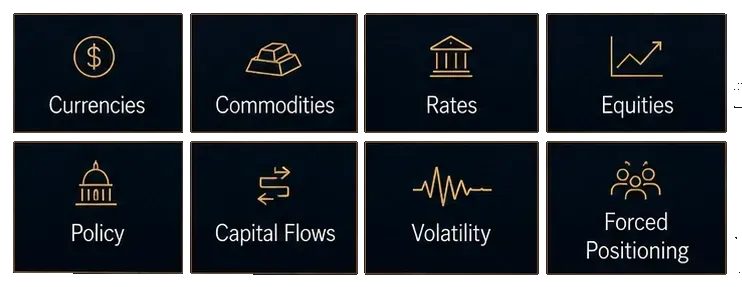
Today, the Andy Krieger Letter gives serious investors his weekly views on currencies, commodities, rates, geopolitics, and the macro pressure points most investors miss until price has already moved.

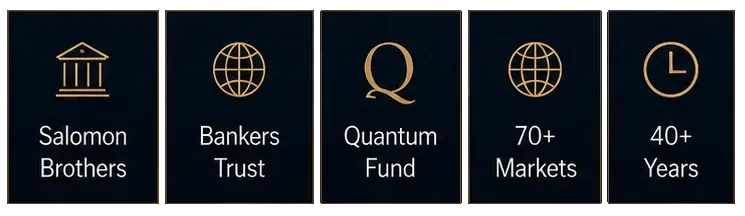
Bankers Trust

Quantum Fund

Central Bank Advisor

70+ Markets

Four Decades Of Macro Experieence

The Risks are not separate anymore

The macro environment is becoming harder to read by the week.

Most market participants are focused on the obvious noise: policy announcements, earnings releases, inflation prints, geopolitical updates, and whatever headline moves price today.

That is understandable.

But major market shifts rarely begin in the headlines.

They usually begin underneath the surface in the relationship between currencies, interest rates, commodities, capital flows, and central-bank constraints before most investors recognize what is happening.

Right now, multiple pressure points are moving at the same time.

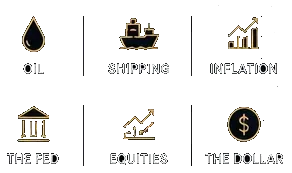
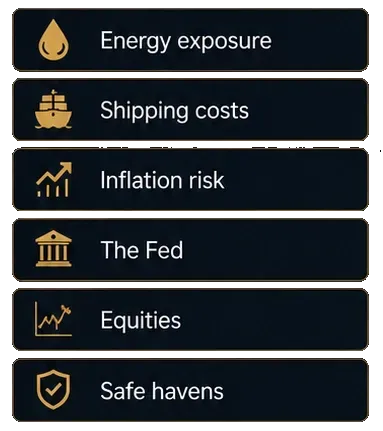
Energy. Food. Japan. The Fed. Equities. Capital flows.

Most investors are treating each one as a separate story.

The energy story. The Japan story. The Fed story. The food story. But they are not separate stories.

They are one connected macro structure.

And when multiple pressure points start moving simultaneously, the edge does not come from reacting faster to headlines.

It comes from understanding how the pieces connect before price fully reflects them.

That is precisely the environment Andy Krieger’s framework was built for.

Complexity is where disciplined macro thinking has the greatest edge over consensus.

ENERGY SHOCK

Is a systemic inflation multiplier.  It is not a single price event.  It feeds into monetary policy, shipping, commodities, food costs, and consumer demand.

FOOD & FERTILIZER

Food prices can lag the underlying supply shock. By the time it shows up in the data, the market may already be adjusting.

YEN CARRY TRADE

A crowded funding structure can look stable for years, then reprice violently when conditions shift.

THE FED TRAP

Cut too soon and risk reigniting inflation. Hold too long and risk slowing an already fragile economy.

EQUITY-DEPENDENT SPENDING

When wealth, confidence, and consumption are tied to asset prices, equity weakness can become a macro event.

THIS IS NOT A MARKET FOR ISOLATED THINKING.

It is a market for connecting pressure points, reading structure, and understanding where dislocations may be forming before they become obvious. All against a backdrop of spiraling debt that is growing faster than the economy.

That is what the Andy Krieger Letter applies every week.

The Risks are not separate anymore

The macro environment is becoming harder to read by the week.

Most market participants are focused on the obvious noise: policy announcements, earnings releases, inflation prints, geopolitical updates, and whatever headline moves price today.

That is understandable.

But major market shifts rarely begin in the headlines.

They usually begin underneath the surface in the relationship between currencies, interest rates, commodities, capital flows, and central-bank constraints before most investors recognize what is happening.

Right now, multiple pressure points are moving at the same time.

Energy. Food. Japan. The Fed. Equities. Capital flows.

Most investors are treating each one as a separate story. The energy story. The Japan story. The Fed story. The food story. But they are not separate stories.

They are one connected macro structure.

And when multiple pressure points start moving together, the edge does not come from reacting faster to headlines.

It comes from understanding how the pieces connect before price fully reflects them.

That is precisely the environment Andy Krieger’s framework was built for.

Complexity is where disciplined macro thinking has the greatest edge over consensus.

ENERGY SHOCK

Is a systemic inflation multiplier.  It is not a single price event.  It feeds into monetary policy, shipping, commodities, food costs, and consumer demand.

FOOD & FERTILIZER

Food prices can lag the underlying supply shock. By the time it shows up in the data, the market may already be adjusting.

YEN CARRY TRADE

A crowded funding structure can look stable for years, then reprice violently when conditions shift.

THE FED TRAP

Cut too soon and risk reigniting inflation. Hold too long and risk slowing an already fragile economy.

EQUITY-DEPENDENT SPENDING

When wealth, confidence, and consumption are tied to asset prices, equity weakness can become a macro event.

THIS IS NOT A MARKET FOR ISOLATED THINKING.

It is a market for connecting pressure points, reading structure, and understanding where dislocations may be forming before they become obvious. All against a backdrop of spiraling debt that is growing faster than the economy.

That is what the Andy Krieger Letter applies every week.

This is the kind of market Andy was built for

Markets like this punish surface-level thinking.

When disruptive headlines are flooding the news cycle, and currencies, rates, commodities, equities, and threatened policy shifts are all flying around, the danger is not just volatility. The danger is false simplicity.

Most investors want one clean explanation. One headline. One villain. One forecast. One answer.

But macro rarely works that way.

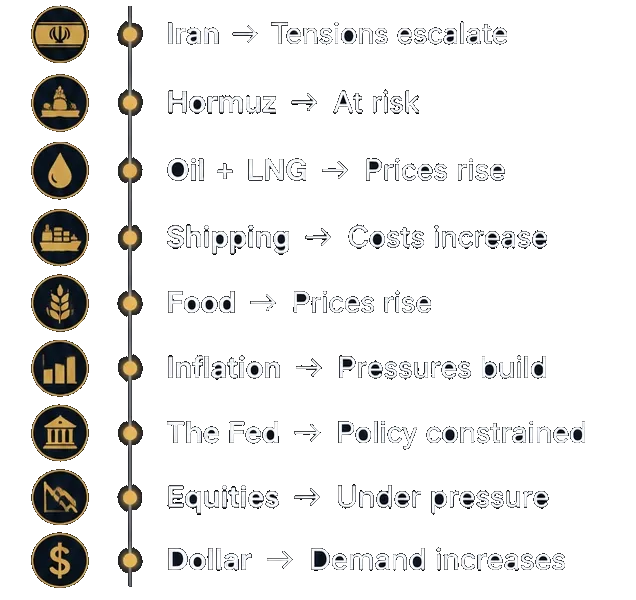
Major dislocations form when several forces begin pressing against the same structure at the same time. A currency move becomes a funding problem. A commodity shock becomes an inflation problem. An inflation problem becomes a central-bank constraint. A policy constraint becomes a market-structure problem and can even lead to political chaos and leadership change.

This is where Andy Krieger's framework becomes valuable.

For more than four decades, he has focused on the same core discipline:

- Identify the mispricing.
- Define the risk.
- Structure for asymmetry upside.
- Wait for the market to reveal itself.

This is not commentary for people who want someone to explain yesterday’s move.

It is a framework for serious investors who want to understand where pressure is building before consensus has caught up.

The market does not need to be easy to read for opportunity to exist.

In fact, the opposite is often true.

Complexity is where disciplined macro thinking has its greatest edge.

BOTTOM TAKAWAY

This is why Andy's perspective matters now. Not because the market is noisy.

Because beneath the noise, the structure is shifting and that is where

his process was built to operate.

The 1987 trade

October 1987.

The stock market had just gone through one of the worst single-day crashes in history. Most traders were shell-shocked. The instinct was to step back, assess the damage, and wait for things to settle.

Krieger was doing the opposite.

He was making a fortune from short dollar bets that he had placed on the yen and Swiss franc before the crash.  He saw the problems brewing and he structured some option plays to benefit from the coming chaos.   He had also been studying the New Zealand dollar.  He believed it was fundamentally overvalued, so as investors fled equities and poured money into the Kiwi, pushing it even further out of line, he knew it was time to act.

The mispricing was significant.

Before entering the trade, he defined the risk. He used options to structure the position so the downside was limited and the upside was asymmetric.

If he was wrong, the loss was defined and limited.  If he was right, the potential gain was very large.


He built the position until it exceeded the entire money supply of New Zealand. The foreign exchange department earned over $500 million that year.  The year before they earned $56 million. The Reserve Bank called Bankers Trust to find out what was happening.

This is the kind of market

Andy was built for

Markets like this punish surface-level thinking.

When disruptive headlines are flooding the news cycle, and currencies, rates, commodities, equities, and threatened policy shifts are all flying around, the danger is not just volatility. The danger is false simplicity.

Most investors want one clean explanation. One headline. One villain. One forecast. One answer.

But macro rarely works that way.

Major dislocations form when several forces begin pressing against the same structure at the same time. A currency move becomes a funding problem. A policy constraint becomes a market-structure problem and can even lead to political chaos and leadership change. An inflation problem becomes a central-bank constraint. A policy constraint becomes a market-structure problem and can even lead to political chaos and leadership change.

This is where Andy Krieger's framework becomes valuable.

For more than four decades, he has focused on the same core discipline:

- Identify the mispricing.
- Define the risk.
- Structure for asymmetry upside.
- Wait for the market to reveal itself.

This is not commentary for people who want someone to explain yesterday’s move.

It is a framework for serious investors who want to understand where pressure is building before consensus has caught up.

The market does not need to be easy to read for opportunity to exist.

In fact, the opposite is often true.

Complexity is where disciplined macro thinking has its greatest edge.

BOTTOM TAKAWAY

This is why Andy's perspective matters now. Not because the market is noisy.

Because beneath the noise, the structure is shifting and that is where

his process was built to operate.

The 1987 trade

October 1987.

The stock market had just gone through one of the worst single-day crashes in history. Most traders were shell-shocked. The instinct was to step back, assess the damage, and wait for things to settle.

Krieger was doing the opposite.

He was making a fortune from short dollar bets that he had placed on the yen and Swiss franc before the crash.  He saw the problems brewing and he structured some option plays to benefit from the coming chaos.   He had also been studying the New Zealand dollar.  He believed it was fundamentally overvalued, so as investors fled equities and poured money into the Kiwi, pushing it even further out of line, he knew it was time to act.

The mispricing was significant.

Before entering the trade, he defined the risk. He used options to structure the position so the downside was limited and the upside was asymmetric.

If he was wrong, the loss was defined and limited.  If he was right, the potential gain was very large.

He built the position until it exceeded the entire money supply of New Zealand. The foreign exchange department earned over $500 million that year.  The year before they earned $56 million. The Reserve Bank called Bankers Trust to find out what was happening.

The markets Change

The Approach Does Not

The 1987 trade was only possible because Andy used:

- The macro conditions change.
- The currencies change.
- The crises change.
- The policy regimes change.

But the process does not.

For four decades, Andy Krieger has applied the same core framework to markets most investors only understand after the fact:

| Identify the mispricing.
| Define the risk before capital is committed.
| Structure for asymmetry.
| Act only when the reward justifies the risk.

That discipline is what connects the legendary New Zealand dollar trade to the markets he is watching today.

Because the opportunity is rarely in the obvious headline.

It is in the gap between what the market believes and what the structure is beginning to reveal.

That is where Andy has spent his career.

And that is the perspective behind the Andy Krieger Letter.

THEN

A currency dislocation after Black Monday.
A market pushed too far by fear

and forced flows.
A defined-risk structure with

asymmetric upside.

NOW

Currencies, commodities, rates, equities, policies, and capital flows are setting up for extreme shifts.  The same discipline is being applied to a different market regime.

BOTTOM TAKEAWAY

The market does not repeat perfectly.

But mispricing, fear, forced flows, and bad positioning never disappear.

They only change form.

Andy’s work is about recognizing them before consensus does.

The Dislocation Framework

Markets do not move because everyone suddenly understands the truth.

They move when price is forced to adjust to reality.

That gap between what the market believes and what the structure is beginning to reveal, Andy Krieger has spent his entire career.

The Andy Krieger Letter is built around that discipline.

Each week, Andy looks across currencies, commodities, rates, policy, geopolitics, and capital flows to identify where pressure is building, where consensus may be mispricing risk, and where the market may be setting up for asymmetric

movement.

This is the framework.

01

Identify The Pressure Point

Find where stress is quietly building beneath the surface before it plays out with major price shifts

02

Find The Mispricing

Andy Krieger has spent his entire career studying the gap between what the market believes and what the underlying structure is beginning to reveal.

03

Define The Risk First

Clarify what would make the thesis wrong before focusing on the potential upside.

04

Structure For Asymmetry

Focus on setups where downside can be contained and upside has room to expand.

05

Track Confirmation Or Rejection

Watch the signals that either strengthen the thesis or prove it wrong.

The markets Change

The Approach

Does Not

The 1987 trade was only possible because Andy used:

- The macro conditions change.
- The currencies change.
- The crises change.
- The policy regimes change.

But the process does not.

For four decades, Andy Krieger has applied the same core framework to markets most investors only understand after the fact:

| Identify the mispricing.
| Define the risk before capital is committed.
| Structure for asymmetry.
| Act only when the reward justifies the risk.

That discipline is what connects the legendary New Zealand dollar trade to the markets he is watching today.

Because the opportunity is rarely in the obvious headline.

It is in the gap between what the market believes and what the structure is beginning to reveal.

That is where Andy has spent his career.

And that is the perspective behind the Andy Krieger Letter.

THEN

A currency dislocation after Black Monday.
A market pushed too far by fear

and forced flows.
A defined-risk structure with

asymmetric upside.

NOW

Currencies, commodities, rates, equities, policies, and capital flows are setting up for extreme shifts.  The same discipline is being applied to a different market regime.

BOTTOM TAKEAWAY

The market does not repeat perfectly.

But mispricing, fear, forced flows, and bad positioning never disappear.

They only change form.

Andy’s work is about recognizing them before consensus does.

The Dislocation Framework

Markets do not move because everyone suddenly understands the truth.

They move when price is forced to adjust to reality.

That gap between what the market believes and what the structure is beginning to reveal, Andy Krieger has spent his entire career.

The Andy Krieger Letter is built around that discipline.

Each week, Andy looks across currencies, commodities, rates, policy, geopolitics, and capital flows to identify where pressure is building, where consensus may be mispricing risk, and where the market may be setting up for asymmetric

movement.

This is the framework.

01

Identify The Pressure Point


Find where stress is quietly building beneath the surface before it plays out with major price shifts.

02

Find The Mispricing

Andy Krieger has spent his entire career studying the gap between what the market believes and what the underlying structure is beginning to reveal.

03

Define The Risk First

Clarify what would make the thesis wrong before focusing on the potential upside.

04

Structure For Asymmetry

Focus on setups where downside can be contained and upside has room to expand.

05

Track Confirmation Or Rejection

Watch the signals that either strengthen the thesis or prove it wrong.

andy Krieger

Lorem Ipsum is simply dummy text of the printing and typesetting industry. Lorem Ipsum has been.

Support

Privacy Policy
Terms & Conditions

Contact Details

  • (978) 759-3849

  • NH.US

Copyright 2026. TAILORED EXIT. All rights reserved.